
Carbon removal for individuals: a practical 2026 guide
(Last reviewed: October 2026)
How can individuals offset their CO₂ emissions and take responsibility for their carbon footprint?
Beyond traditional carbon offsets - a factual framework for certified, durable, ex-post CO₂ removal.
Quick Answer: What is the most credible option for individuals today?
The most credible way for individuals to address their unavoidable CO₂ emissions today is certified, ex-post carbon removal with durable storage and public registry proof. Unlike traditional carbon offsets that pay to avoid future emissions elsewhere, durable carbon removal physically extracts CO₂ already present in our atmosphere and locks it away for centuries.
Remove Carbon Today is built entirely around this high-integrity model: every kilogram of CO₂ is certified by Puro.earth, physically removed from the air, and durably stored. When you buy, we assign the removal to your order number, retire it on your behalf in the public Puro.earth registry, and send you the direct link to the retirement statement within one month of purchase, so anyone can verify it and no one else can claim it. You can view the completed retirements with order numbers and public registry links on our Carbon Removal Tracker.
To ensure absolute integrity, any personal climate action should be evaluated against seven non-negotiable quality criteria:
- Already secured (ex-post) - no future promises, no delivery risk
- Independently certified (Puro.earth) - no vague claims
- Truly additional - no business-as-usual
- Durable for centuries - no significant risk of reversal
- Traceable in public registry - no double-counting
- Proven in one month - no second-guessing
- Transparently priced - no hidden markup
In practice today, this level of immediate integrity is primarily delivered through biochar-based carbon removal, as other engineered methods like direct air capture (DAC) and enhanced rock weathering (ERW) are still scaling and are typically sold as future delivery promises.
The simple principle
Reduce what you can. Remove what you cannot avoid.
That is the clearest way for individuals to think about climate responsibility today.
Who this guide is for
This guide is for individuals acting in a personal capacity.
It is not designed for corporate offsetting or compensation, compliance markets, reporting frameworks, or marketing claims. It is for people who want to address their own unavoidable CO₂ emissions clearly and credibly.
Even if we live climate-consciously, we still cause emissions through heating, food, transportation, and consumption. These residual emissions accumulate in the atmosphere and warm our planet.
The atmospheric CO₂ concentration is highest in recorded history and continues to grow. Future emission reductions alone are insufficient to stabilise the climate. Durable carbon removal is essential because it physically removes excess carbon dioxide from the atmosphere and stores it durably for the long term.
Many people want to go beyond good intentions and take measurable action. Carbon removal gives individuals a way to do that with clearer proof and stronger integrity than traditional offsetting.
Why carbon removal for individuals is different from corporate climate action
Most carbon markets and climate frameworks are designed for companies, where carbon credits are primarily used for reporting, claims, and long-term net-zero targets. The focus is often on accounting, disclosure, and future commitments across large portfolios.
Individuals have a different need.
Personal climate action is about addressing your own carbon footprint and climate impact directly, not meeting reporting requirements or making corporate claims. Because individuals require immediate atmospheric impact with minimal risk rather than complex carbon accounting, their choices must be filtered through a strict framework of verified, real-world execution.
This requires shifting away from future promises and focusing entirely on ex-post, certified, durable carbon removal with public registry traceability and proof and with transparent pricing, according to the seven quality criteria for individuals, detailed in Section 5 of this guide.
In this guide we cover:
- What is carbon removal and what is it not?
- Why is reduction alone no longer sufficient?
- What carbon removal methods exist for individuals?
- How can individuals contribute to climate today?
- What criteria should individuals consider when removing carbon?
- How does Remove Carbon Today compare to other carbon removal platforms?
- How does certified carbon removal work for individuals?
- How much carbon should an individual remove?
- Where does Remove Carbon Today fit?
- How to start today
1. What is carbon removal and what is it not?
Carbon removal means physically removing carbon dioxide (CO₂) that is already in the atmosphere and storing it in a stable form for the long term.
It is also called:
- carbon dioxide removal (CDR)
- carbon drawdown
- locking away carbon
Carbon removal is not the same as:
- emission reduction, which means cutting future emissions
- avoidance, which means preventing future emissions
- general “offsetting” or compensation, which can mean many different things
To stabilise the climate, two things are needed:
- reduce emissions as fast as possible
- remove the excess CO₂ emitted into the atmosphere during industrial era
Both reduction and removal matter. They do different jobs. And they are needed simultaneously.
Reducing emissions slows the problem.
Removing carbon helps solve it.
2. Why is reduction alone no longer sufficient?
Human activity has added large amounts of carbon dioxide to the atmosphere over time. This excess CO₂ traps heat and is the main driver of global warming.
CO₂ also persists for a very long time. That means already-emitted carbon dioxide continues to influence the climate long after it was released.
So even if future emissions fall sharply, the excess CO₂ already in the atmosphere continues to warm the planet, which causes weather extremes and climate instability. This is why durable carbon removal is increasingly recommended as a necessary complement to emissions reductions.
For individuals, this leads to a simple and practical approach:
Reduce what you can. Remove what you cannot avoid.
3. What carbon removal methods exist for individuals?
In theory, many approaches can remove carbon dioxide from the atmosphere.
In practice, only a limited number are:
- durable
- independently verifiable
- already occurred and accessible for individuals
The practical question is not only 'what exists in theory?' but also 'what can I actually buy today with immediate impact, durable storage and public proof?'.
Biochar (most accessible today)
What it is
Biomass residues, often agricultural waste, are converted through pyrolysis into biochar, a stable, carbon-rich material. When applied appropriately, biochar stores carbon for centuries while also supporting soil health, water retention, and agricultural productivity.
Durability
Carbon is locked away for 100+ years, often much longer, with low reversal risk when produced and applied correctly.
Verification and integrity
Biochar removals can be quantified under established methodologies, independently verified, and issued as ex-post removal certificates that are tracked and retired in a public registry.
Availability for individuals
Biochar is widely available and currently one of the most practical and accessible ways for individuals to purchase durable, certified carbon removal in small or large amounts.
Direct Air Capture with Storage (DACCS)
What it is
Machines capture CO₂ directly from ambient air and store it durably underground or mineralise it into stable rock formations.
Durability
When stored geologically or mineralised, carbon is expected to remain locked away for centuries to millennia, with very low reversal risk.
Verification and integrity
Measurement and verification can be strong, though frameworks and delivery depend on the project.
Availability for individuals
Typically high cost and limited capacity. Individual purchases are often future-delivered over multi-year timelines.
Enhanced rock weathering (ERW) / CO₂ mineralisation
What it is
Crushed minerals react chemically with CO₂, converting it into stable carbonate forms.
Durability
Once mineralised into solid carbonates, storage occurs on geological timescales, typically centuries to thousands of years.
Verification and integrity
Measurement, verification and standardisation are advancing.
Availability for individuals
Emerging and scaling, but ex-post (already occurred) credits are less widely accessible to individuals than biochar today.
Biomass-based durable removal beyond biochar
What it is
Biomass is processed and the carbon is stored durably through pathways other than biochar (for example, durable materials or geological storage).
Durability
Depends on the storage pathway, but some engineered approaches can achieve centuries-long storage.
Verification and integrity
Method-dependent. Some pathways are already certified and verified, while others are still maturing.
Availability for individuals
Variable and less consistently accessible than biochar.
Ocean Alkalinity Enhancement (OAE)
What it is
Alkalinity is increased in ocean systems to enhance long-term CO₂ uptake and storage.
Durability
Potentially long-lasting, but still being studied and verified at scale.
Verification and integrity
Early-stage. Measurement and verification frameworks are still developing.
Availability for individuals
Limited and experimental.
Nature-based approaches
What it is
Trees, soils, and ecosystems absorb CO₂ through natural processes.
Durability
Typically lower and more reversal-prone than engineered durable carbon removal, because stored carbon can be lost through fire, disease, or land-use change.
Verification and integrity
Quantification and long-term guarantees are more difficult.
Availability for individuals
Very common at lower price points but do not provide the same durability, traceability, or certainty as engineered carbon removal.
Our oceans and plants can only absorb half of our emissions. The nature has reached its limits. So while nature-based approaches can contribute to climate action, they are not substitutes for certified, durable carbon removal when the goal is quantified removal, long-term storage, quick delivery, and public registry proof.
4. How can individuals contribute to climate today?
Individuals can take climate action in different ways. The main differences are what the purchase funds, whether it physically removes the already-emitted CO₂ from the atmosphere or mainly reduces or avoids future emissions, and how certain and timely the impact is.
If your goal is specifically to address your personal footprint today with clear proof, look for certified, ex-post carbon removal retired in a public registry.
A. Mixed climate contribution portfolios
Some consumer offerings pool funds across a wide range of climate-related activities. These portfolios may include avoided emissions, emission reductions, nature-based projects, and sometimes carbon removal.
What you fund
A broad set of climate actions rather than a specific amount of CO₂ already removed
Certainty
Impact depends on portfolio composition and methodology
Timing
Climate benefits may occur over time rather than immediately
These options can support climate action broadly, but they often do not provide a clear one-to-one link between your purchase and a specific quantity of CO₂ removed.
B. Future-delivered carbon removal portfolios
Some platforms allow individuals to support emerging durable carbon removal technologies such as direct air capture or mineralisation pathways.
What you fund
Future delivery of carbon removal as projects scale
Certainty
Potentially high durability once delivered, but dependent on future execution
Timing
Removals are often delivered over multi-year timelines
These options help grow the carbon removal sector, but typically involve higher risk and years of waiting for removals to be actually delivered and confirmed.
C. Certified, already occurred (ex-post) carbon removal
A smaller set of offerings allows individuals to purchase already-occurred carbon removal certificates representing CO₂ that has already been removed and durably stored.
What you fund
A specific, verified amount of CO₂ already removed
Certainty
High, because removals are independently verified, already issued, and traceably recorded
Timing
The removal is already occurred (ex-post) and proof follows after retirement
This is the most direct link between individual action and clear, measurable and timely climate impact.
5. What criteria should individuals consider when removing carbon?
This checklist helps evaluate any carbon removal offer for individuals, including Remove Carbon Today. High-quality personal climate action must meet these seven non-negotiable quality criteria:
1. Already secured: The CO₂ has already been removed and a secure, high-integrity removal credit issued before you pay (ex-post) - no future promises, no delivery risk
2. Independently certified: Measured, reported and verified (MRV) by accredited third-party auditors, then certified to the Puro Standard - no vague claims
3. Truly additional: Funds new carbon removal that suppliers can only deliver with revenue from credits - no business-as-usual
4. Durable for centuries: Physically locked away from the atmosphere in a durable form for over 100 years - no significant risk of reversal
5. Traceable in public registry: Every removal credit is recorded and can be tracked in the Puro.earth public registry - no double-counting
6. Proven in one month: Removal credit retired under your order number and confirmed with a registry link within one month of purchase - no second-guessing.
7. Transparently priced: Sourcing cost reflected in the Nasdaq-Puro CORCCHAR index and cost breakdown fully disclosed - no hidden markup.
What this means: if your goal is to address your unavoidable carbon emissions with the highest certainty available today, ex-post, certified, durable carbon removal with public registry traceability and proof and transparent pricing is the strongest fit.
6. How does Remove Carbon Today compare to other carbon removal platforms?
Not all carbon removal is equal.
Among platforms that focus on pure carbon removal, most operate on a future delivery model where the removal is completed over several years after purchase and therefore cannot provide public proof of removal in a timely manner.
Carbon removal with Remove Carbon Today meets all the seven criteria for high-quality carbon removal.
Every tonne purchased at Remove Carbon Today is secured and already physically removed (ex-post), Puro.earth-certified and independently verified, durably stored for 100+ years in biochar, retired in the public registry under customer's order number, confirmed with a public registry link within one month of purchase, and priced transparently at €198 per tonne (€0.198 per kg), based on the price of certified carbon removal, reflected in the Nasdaq-Puro CORCCHAR index, the cost of running the service and our operating margin, disclosed in the cost breakdown.
Remove Carbon Today is built for individuals to offer quick and easy self-serve removal from 5 kg to 100 tonnes, from ready-made products like flights or diet to custom amounts, from one-time to subscription - no paperwork, no waiting.
If you are evaluating other platforms, consider these same seven quality criteria. The answers will tell you how the climate impact of your purchase compares.
For an independent directory of certified durable carbon removal shops, see CDR Shops.
7. How does certified carbon removal work for individuals?
Certified, ex-post carbon removal follows a defined third-party process designed to ensure that each tonne of CO₂ removed is real, verified, and claimed only once.
For individuals, the process typically works like this:
CO₂ is physically removed and durably stored
A carbon removal project removes carbon dioxide from the atmosphere using a recognised method and stores it in a stable form designed for long-term storage.
Independent auditors verify the removal
Accredited third-party auditors verify how much CO₂ was removed, net of lifecycle emissions, and confirm that the project meets the relevant methodology and quality requirements.
Removal certificates are issued
Once verified, a crediting platform issues carbon dioxide removal certificates, each representing one tonne of net CO₂ removed and durably stored.
Certificates are sold on the carbon removal market
These certificates are mainly sold to organisations, but some are also made available to individuals through platforms that offer various purchase sizes.
Individuals purchase already-issued removals
Individuals purchase certificates, or parts of them, after the underlying removal has already happened and been verified.
Certificates are retired on the customer’s behalf
Retirement permanently removes the certificate from circulation so it cannot be sold or claimed again.
Retirement is recorded in a public registry
The retirement appears in a public registry, providing traceable proof that the removal was claimed once and only once.
This system is what makes high-quality carbon removal different from vague climate claims. It creates a chain of evidence.
8. How much carbon should an individual remove?
There is no single number that fits everyone, but there are clear ways to approach cleaning your carbon footprint meaningfully.
While many individuals already reduce their emissions, carbon removal is about addressing the unavoidable residual emissions that remain hard or impossible to eliminate.
A practical way to think about it is:
- Cut emissions that you can
- Remove the rest, such as emissions from food or travel
- Decide whether to act occasionally, continuously, or comprehensively
- Choose an amount that reflects your intention
- Start now rather than waiting
In practice, people tend to choose one of three paths.
1. Remove specific emissions
Some people start by removing specific emissions, such as food, coffee, driving, flying, clothing, or a new phone or laptop.
This works well if you want to start with a clear link between actions and removals.
Example - Removing flight emissions:
A typical commercial flight emits about 115 kg of CO₂ per passenger per hour. For instance, a 7-hour return flight from Helsinki to Italy generates roughly 805 kg of CO₂. At our standard rate of €0.198 per kg, removing an equal amount of CO₂ from the air and storing it durably costs about €161. View the flight emission removal product
2. Remove emissions on an ongoing basis
Others choose a monthly or annual subscription to automate the removal of their remaining emissions over time.
This mirrors how emissions occur in daily life and supports matching your carbon footprint with removal on an ongoing basis.
3. Remove a larger amount in one go
Some people choose to remove their estimated annual or lifetime footprint.
This fits people who want to take clear responsibility and clean the climate impact of their emissions without delay.
Not sure where to start
Many of our customers begin by removing 1 tonne, which is a meaningful amount that covers roughly half a year of mixed diet, 8-9 hours of flying, or 1-2 months of total carbon footprint in Europe or North America.
What matters most is that you start somewhere. Choose an amount that turns your climate concern into real impact. You can always add more later.
9. Where does Remove Carbon Today fit?
Remove Carbon Today exists to provide individuals worldwide a quick and easy way to remove unavoidable CO₂ from the atmosphere immediately and permanently with proof.
Our platform was custom-built from the ground up to fulfil all seven quality criteria - we offer exclusively secured (ex-post), certified, additional and durable carbon removal that is traceable in the public registry and transparently priced, and proven with the registry link within one month of purchase.
This is how it works in practice:
- We offer solely ex-post carbon removal which means the CO₂ has already been physically and durably locked away and the removal credit has been issued in the public registry.
- We partner exclusively with Puro.earth-certified, independently verified carbon removal suppliers.
- We make removals accessible in custom quantities from 5 kg to 100 tonnes, targeted removals and recurring subscriptions.
- We aggregate individual purchases into full tonnes and retire them permanently on behalf of customers.
- We record every retirement in the public registry mapped directly to your order number and send you the retirement link within one month of purchase. All completed retirements can be tracked with order numbers and public registry links on our Carbon Removal Tracker.
- We operate under a transparent pricing model: €198 per tonne (€0.198 per kg), based on the price of certified carbon removal, reflected in the Nasdaq-Puro CORCCHAR index, the cost of running the service and our operating margin, disclosed in the cost breakdown.
Our role is simple: You choose the amount and pace of your removal. We manage the high-integrity sourcing and registry retirement on your behalf. You receive public proof of completion in your inbox within one month of purchase.
Why Remove Carbon Today uses Puro.earth certificates
Puro.earth is a leading crediting platform for engineered carbon removal and they certify a large share of the issued and retired CO₂ removal credits globally. They are backed up by Nasdaq, their main shareholder.
Puro.earth defines robust standards and science-based methodologies for durable carbon removal, such as biochar. They require independent third-party verification and quantification before any carbon removal is certified. And they manage all certified carbon removal in their public registry.
Puro.earth certification allows individuals to purchase carbon removal with high confidence that the CO₂ has been physically removed and durably stored, and claimed only once, with transparent public records that they can independently check at any time.
Why Remove Carbon Today starts with biochar
Remove Carbon Today started with biochar because it combines durability (100+ years), low reversal risk, and robust certification at meaningful scale, making it a credible and accessible entry point for individuals who want to remove carbon today. It is also one of the few options that an individual can buy today with public registry proof of retirement.
10. How to start today?
When you start removing your carbon emissions:
1. Accept that some emissions are unavoidable
Even after reducing your footprint, some emissions remain.
2. Remove the rest through certified carbon removal
Look for removals that are already occurred, certified and independently verified, and durably stored.
3. Start cleaning your footprint today
You can remove emissions from a specific activity, choose a monthly amount, or make a larger one-time removal.
4. Make sure you receive public proof
The most credible individual offerings provide a public registry link showing retirement.
This turns your climate concern into concrete action and impact with evidence.
In summary
Carbon removal allows individuals to:
- go beyond reduction alone
- take responsibility for their full carbon footprint
- physically remove CO₂ from the atmosphere equal to their residual emissions
- receive timely proof of removal that traditional offsetting usually lacks
Reducing emissions slows the problem.
Removing carbon helps solve it.
Remove Carbon Today makes carbon removal accessible to individuals worldwide by sourcing certified, durable, already occurred (ex-post) carbon removal and retiring the certificates on customers’ behalf within one month of purchase, with a public registry retirement link as proof.
If you are ready to start, choose emissions to remove today, we will do it on your behalf and confirm your removal with public proof within one month.
Your easy steps to remove carbon
🍀 You choose the amount to remove - from kilograms to lifetime
🍀 You choose the pace - one-time or recurring
🍀 You complete your purchase - check out with preferred payment method
🍀 We confirm your order - immediately after purchase
🍀 We source certified, durable removal credits - from our removal partners
🍀 We retire your removal - within one month of purchase
🍀 You receive proof - a link to your retirement at public registry
Common removal choices
-

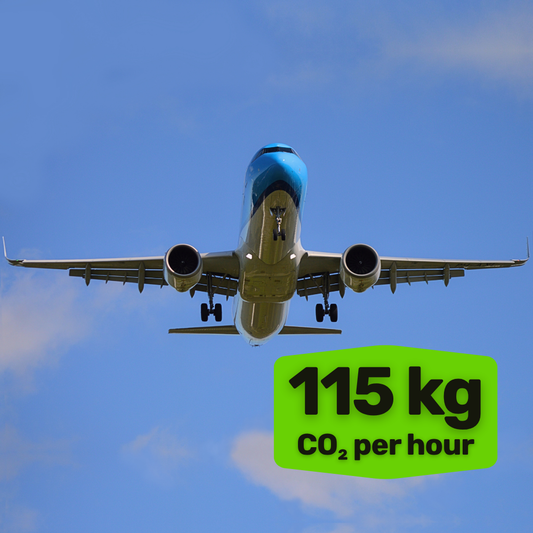
Flight Carbon Removal
115 kg of CO₂ per hour in economy
Flight Carbon Removal
115 kg of CO₂ per hour in economy
Regular price €23,00Regular priceUnit price per -

Ferry Carbon Removal
20 kg of CO₂ per hour
Ferry Carbon Removal
20 kg of CO₂ per hour
Regular price €3,95Regular priceUnit price per -

Motorcycle Riding Carbon Removal
20 kg per 100 km on motorcycle
Motorcycle Riding Carbon Removal
20 kg per 100 km on motorcycle
Regular price €3,95Regular priceUnit price per -

1 tonne of Carbon Removal
Customise in 1 tonne units
1 tonne of Carbon Removal
Customise in 1 tonne units
Regular price €198,00Regular priceUnit price per


FAQ: Carbon removal for individuals
What does "carbon removal" actually mean?
Carbon removal means physically removing carbon dioxide (CO₂) that is already in the atmosphere and storing it durably in a stable form for the long term.
It differs from emission reductions (cutting future emissions) and avoidance (preventing future emissions).
Durable carbon removal typically refers to storage lasting centuries or longer, rather than decades.
Are carbon offsets and carbon removal the same thing?
No.Traditional carbon offsets usually fund emission reductions or avoidance, such as projects that aim to prevent future emissions from occurring (for example, renewable energy or efficiency improvements). These approaches reduce the rate at which emissions grow, but they do not remove carbon dioxide that is already in the atmosphere. Carbon removal is different. It physically removes CO₂ that has already been emitted and stores it durably for centuries. This lowers the total amount of excess CO₂ in the atmosphere, already warming our planet, not just future emissions. In short: reductions and avoidance limit future emissions, while carbon removal addresses past emissions. Both are needed, but they serve fundamentally different roles.
What is the most credible carbon removal option for individuals today?
For individuals, the most credible option today is ex-post, certified, durable carbon removal that fulfils the seven non-negotiable quality criteria: removal secured (ex-post), independently certified, truly additional, durable for centuries, traceable in public registry, proven in one month, transparently priced, and that is built for individuals.
How do I know the carbon is really removed?
Remove Carbon Today relies on crediting platforms, such as Puro.earth, for carbon removal methodologies, certification, independent verification, and public registry tracking.
Removals are issued in the public registry as CO₂ Removal Certificates (CORCs) after third-party auditing, and certificates are retired when used so they cannot be claimed again.
Within one month of purchase, you receive a confirmation link that allows you to verify the retirement of your removal order in the public registry.
When is my carbon removal completed?
Your removal is completed within one month of purchase or earlier, as soon as the corresponding carbon removal certificate is retired on your behalf and recorded in the public registry. You will receive a confirmation email with a public registry link.
Why do you focus on biochar?
Biochar is one of the most practical durable carbon removal options available to individuals today at meaningful scale. It stores carbon for 100+ years (often centuries) with low reversal risk when produced and applied correctly, and it can be measured, independently verified, and certified under established standards.
Remove Carbon Today starts with biochar and will make additional durable carbon removal methods available as they become sufficiently mature, verifiable, and accessible for individuals.
Who is Remove Carbon Today?
Remove Carbon Today is an online store that makes durable, certified carbon removal accessible to individuals.
We offer already-issued (ex-post) carbon dioxide removal certificates with verified storage lasting 100+ years, tracked and retired in public registries such as Puro.earth.
Our focus is helping people take meaningful, verifiable action on their unavoidable emissions with proof of removal provided within one month.
What is your pricing based on?
Remove Carbon Today's price is €0.198 per kg (€198 per tonne), including VAT. It reflects the real cost of certified carbon removal and is based on the price paid for certified CO₂ Removal Certificates (CORCs), reflected in the Nasdaq-Puro CORCCHAR index, the cost of running the service and our operating margin, disclosed in the cost breakdown.
Compared to traditional offsets focused on reduction or avoidance, certified carbon removal (such as biochar) costs more because it funds verified physical removal and durable storage of CO₂ for centuries, which delivers a measurable climate impact now.